


Los Angeles is loud. Freeways run through nearly every neighborhood, flight paths cross the city from LAX, Burbank and Van Nuys, and plenty of homes sit on busy boulevards. For many homeowners, the windows are the weakest point in the wall when it comes to keeping noise out.
The good news: replacement windows can make a big difference. Here is how window soundproofing works, what the ratings mean, and how to get the most quiet for your money.
Why windows let noise in
Sound reaches you through a window in two ways:
- Through the glass. Sound waves make the glass vibrate, and the vibrating glass passes the sound into the room. Thin, single panes vibrate easily.
- Through gaps. Any opening that lets air through lets sound through. Worn weatherstripping, loose sashes and gaps around the frame are often a bigger problem than the glass itself.
That is why a new window often sounds dramatically quieter than an old one even before you choose any special glass: the frame closes tightly and the installation is sealed.
STC and OITC: the two sound ratings
STC (Sound Transmission Class) is the rating you will see most often. Higher numbers mean better sound blocking. STC was designed around the frequencies of human speech, so it is a good measure for voices, a neighbor’s TV or a barking dog.
OITC (Outdoor-Indoor Transmission Class) is designed for outdoor noise such as road and rail traffic and nearby aircraft. If your problem is a freeway, a truck route or planes overhead, ask for the OITC rating too — two windows with the same STC can perform differently against traffic rumble.
As a rough guide from glass manufacturer lab testing:
| Glass type | Typical STC (glass only) |
|---|---|
| Single pane | High 20s to about 30 |
| Standard dual pane | About 28 to 34 |
| Dual pane with one laminated pane, or panes of different thickness | Mid-30s to low 40s |
Ratings for a complete window are usually somewhat lower than glass-only lab numbers, so always compare the ratings published for the specific window you are buying. As a rule of thumb, every few STC points is a noticeable improvement, and a jump of about 10 points sounds roughly half as loud to most people.
The upgrades that make the biggest difference
1. Laminated glass
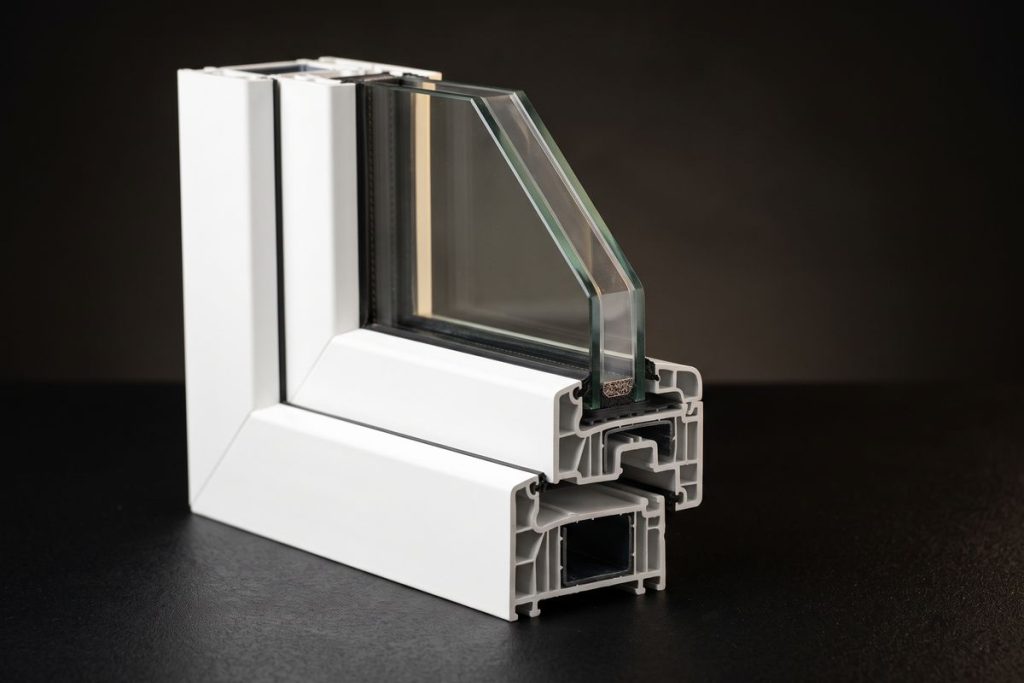
Laminated glass is two layers of glass bonded to a clear plastic interlayer. The interlayer damps vibration, so less sound passes through. Swapping one pane of a dual-pane unit for laminated glass is the single most effective acoustic upgrade for most homes. It has two side benefits: it holds together if broken, which helps with security, and a standard PVB interlayer screens about 99 percent of ultraviolet light, which helps protect floors and furniture from fading.
2. Panes of different thickness
Two panes of the same thickness tend to vibrate at the same frequency, letting that frequency through. Using panes of different thickness means each pane blocks what the other lets through. It is a modest-cost upgrade that adds real performance.
3. A tight frame and installation
Casement and awning windows press their sash against the weatherstripping when closed, which tends to seal better than sliding windows. Whatever the style, the gap between the window and the wall must be fully insulated and sealed. A premium acoustic window installed with gaps will disappoint.
Which rooms to start with
Most homeowners do not need acoustic glass in every window. Start with the rooms where noise bothers you most:
- Bedrooms facing the street or freeway, where noise affects sleep.
- Home offices, where you take calls and need to concentrate.
- Rooms under a flight path, where aircraft noise is the issue.

Remember that a window is only one part of the wall. If a room has a thin exterior door, an open vent or a gap under the door, sound will find that path too.
Setting realistic expectations
No window makes a house next to a freeway silent. What good noise-reducing windows do is take the edge off: traffic becomes a low background hum instead of something that wakes you up, and you can hold a conversation without raising your voice. Homeowners who replace old single-pane or aluminum windows usually notice the biggest improvement.
Not sure your windows are the weak spot? Our post on signs your home windows need replacement is a good checklist, and aluminum vs. vinyl windows explains why frame material matters too.
Get a quieter home
Visit the Wintorium Windows & Doors showroom at 543 W Ave 26 in Los Angeles to compare windows in person, or call (855) 525-6600 for a free in-home quote. Tell us where the noise comes from, and we will recommend the glass that fits.
← More from the Wintorium blog

