


Every energy-rated window sold in the United States carries a small sticker from the National Fenestration Rating Council (NFRC). It is the one place where you can compare windows from different manufacturers on equal terms. The trouble is that the label is a row of decimals with little explanation.
Here is what each number means, which ones matter most for a Los Angeles home, and what the current rules ask for.
Why the NFRC label exists
NFRC is an independent nonprofit that sets the test procedures for windows, doors and skylights. Its label rates the whole window — glass, frame and spacer together — not just the glass. That matters, because a great glass package in a leaky or highly conductive frame performs worse than the glass alone suggests. When you compare quotes, compare the NFRC numbers for the exact product, size category and glass option you are being offered.
The numbers on the label
| Rating | What it measures | Range | Better is |
|---|---|---|---|
| U-factor | How much heat passes through the window | about 0.20 to 1.20 | Lower |
| Solar Heat Gain Coefficient (SHGC) | How much of the sun’s heat gets through | 0 to 1 | Lower, for LA cooling |
| Visible Transmittance (VT) | How much daylight gets through | 0 to 1 | Higher, for brighter rooms |
| Air Leakage (AL), optional | How much air leaks through the window | 0.3 or less for most windows | Lower |
| Condensation Resistance (CR), optional | How well the window resists interior condensation | 1 to 100 | Higher |
U-factor
U-factor tells you how well the window insulates. Old single-pane aluminum windows are near the top of the range; a modern dual-pane vinyl window with Low-E glass and argon gas usually lands around 0.30 or lower. In our mild climate, U-factor matters most on cold winter nights and in inland valleys, where temperatures swing more.
Solar Heat Gain Coefficient (SHGC)
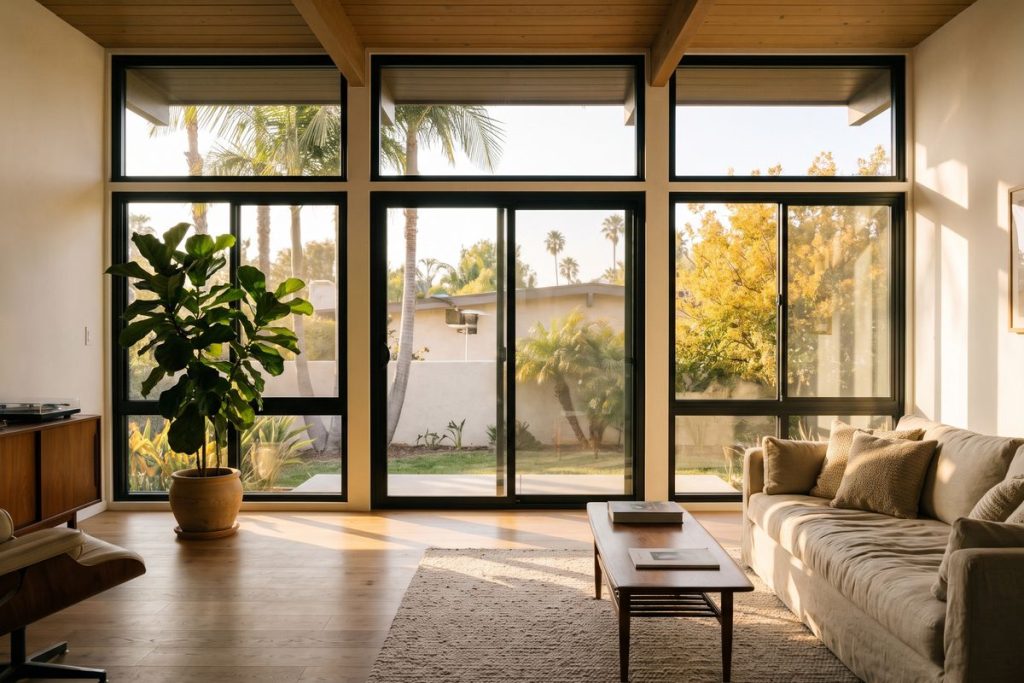
For most Los Angeles homes, this is the most important number on the label. SHGC is the fraction of the sun’s heat that makes it through the window into your house. An SHGC of 0.23 means about 23 percent of the solar heat striking the window comes through. Lower SHGC keeps west- and south-facing rooms cooler in the afternoon and cuts air-conditioning costs.
Visible Transmittance (VT)
VT is how much visible light gets through. A higher number means a brighter room. Glass coatings that reduce solar heat can also reduce visible light a little, so the trick is to find a glass package with a low SHGC and a reasonably high VT. That combination keeps rooms cool without making them feel dim or tinted.
Air Leakage and Condensation Resistance
These two ratings are optional, so not every label shows them. Air Leakage is measured in cubic feet of air per minute per square foot of window. ENERGY STAR and California’s energy code both cap it at 0.3 for windows and sliding doors. Condensation Resistance runs from 1 to 100; higher means the inside surface stays warmer and fogs up less.
What numbers to look for in Los Angeles
ENERGY STAR. ENERGY STAR places Los Angeles County in its South-Central climate zone. For windows in that zone (ENERGY STAR version 7), the criteria are a U-factor of 0.28 or lower and an SHGC of 0.23 or lower. You can check any ZIP code with the climate zone finder on energystar.gov.
California’s energy code. California’s Title 24 energy standards set their own limits. Under the 2025 code, in effect since January 1, 2026, replacement windows in most of the Los Angeles basin (climate zones 6, 8 and 9) must generally meet a maximum U-factor of 0.30 and a maximum SHGC of 0.23. There is an important exception for smaller jobs: if you are replacing no more than 75 square feet of windows, the limits are a U-factor of 0.40 and an SHGC of 0.35. Requirements are different in the high desert and mountain areas of the county, so your installer should confirm the numbers for your address.
In practice, a quality dual-pane Low-E window chosen for Southern California usually meets these numbers with room to spare. The label is how you confirm it.
Questions to ask when you compare quotes
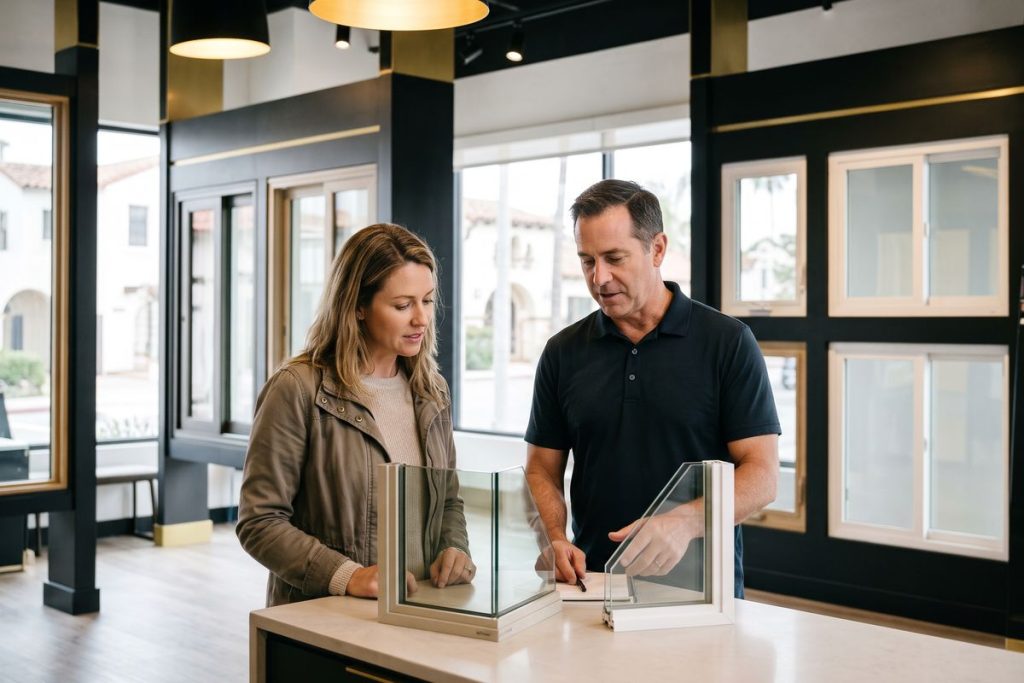
- What are the U-factor, SHGC and VT for this exact window and glass option? Ask for the NFRC numbers, not a brochure’s “up to” figures.
- Does every window in the quote meet ENERGY STAR for my area?
- Is the glass different on the sunny side of the house? Some homeowners choose a lower SHGC on west-facing glass and a higher VT on north-facing glass.
- Does the product meet Title 24 for my project? Your contractor is responsible for this, and it is checked when a permit is required.
For more on glass options, read how to select the right replacement window glass and what you should know about window gas fills. Unfamiliar terms are defined in our window and door glossary.
A note on tax credits
The federal Energy Efficient Home Improvement Credit used to cover part of the cost of qualifying windows and doors. Under the 2025 federal budget law, that credit is not allowed for property placed in service after December 31, 2025. Energy-efficient windows still pay you back through lower cooling bills and a more comfortable home, but do not count on the federal credit for a project completed in 2026.
See the numbers in person
At the Wintorium Windows & Doors showroom at 543 W Ave 26 in Los Angeles, you can compare glass options and their ratings side by side. Or call (855) 525-6600 to schedule a free in-home quote. Ask us to walk you through the label for each window we recommend.
← More from the Wintorium blog

